Free chart · PDF
Which plants are safe for cats?
A printable chart of 55 plants and flowers: which are an emergency for cats (true lilies), which are toxic and which are safe.
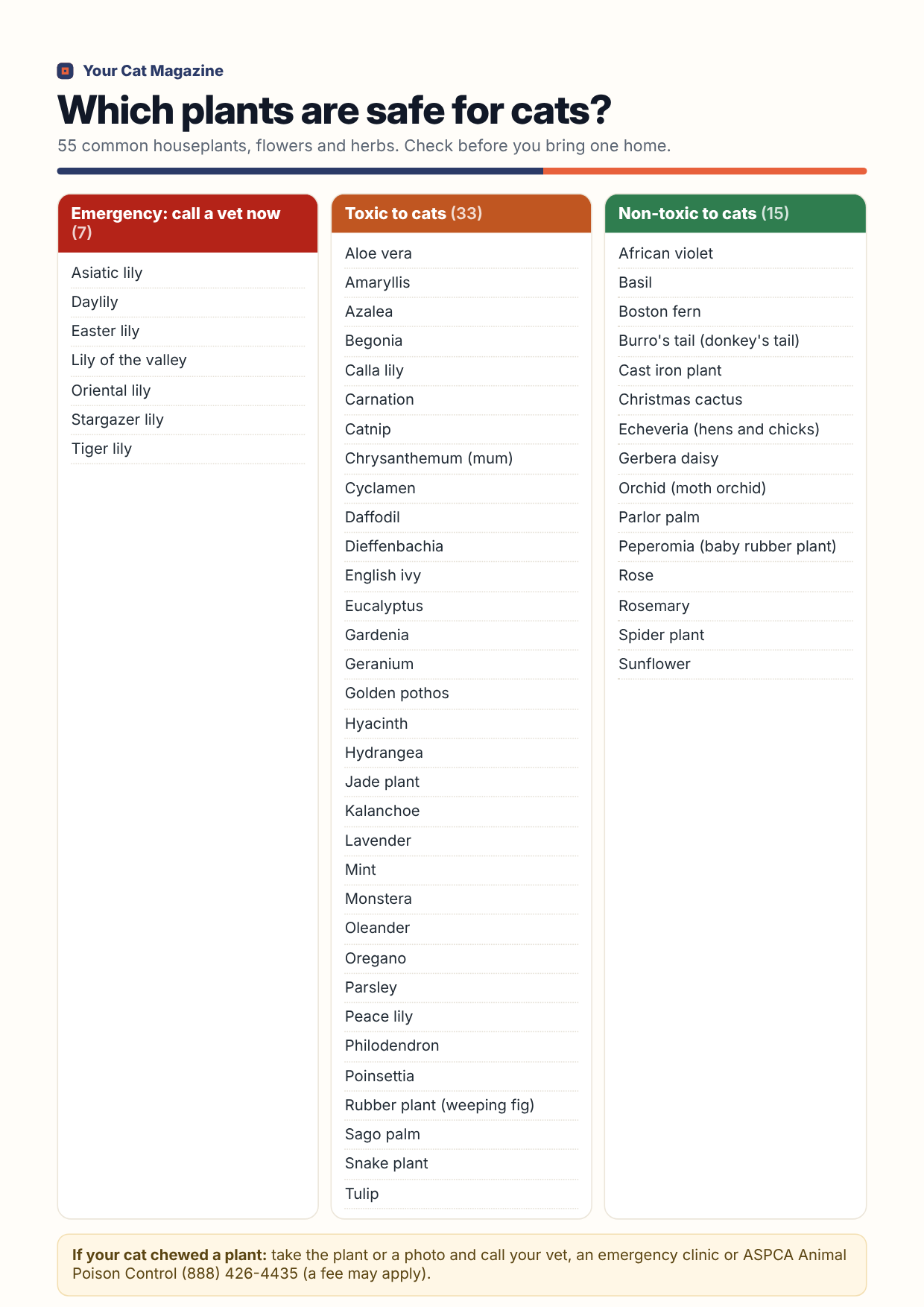
1 page, US Letter size, 49 KB. Free, no sign-up.
Sources: ASPCA toxic and non-toxic plant lists; U.S. FDA. Checked October 2026.
Share it
PinterestFacebookWhatsAppEmail
Printing tips
- Print at actual size (100%), not "fit to page", so the lines stay a usable size.
- It is laid out for US Letter paper and also fits A4.
- Turn on "background graphics" if the colors come out pale.
What is on this chart
- Asiatic lily
- Daylily
- Easter lily
- Lily of the valley
- Oriental lily
- Stargazer lily
- Tiger lily
- Aloe vera
- Amaryllis
- Azalea
- Begonia
- Calla lily
- Carnation
- Catnip
- Chrysanthemum (mum)
- Cyclamen
- Daffodil
- Dieffenbachia
- English ivy
- Eucalyptus
- Gardenia
- Geranium
- Golden pothos
- Hyacinth
- Hydrangea
- Jade plant
- Kalanchoe
- Lavender
- Mint
- Monstera
- Oleander
- Oregano
- Parsley
- Peace lily
- Philodendron
- Poinsettia
- Rubber plant (weeping fig)
- Sago palm
- Snake plant
- Tulip
- African violet
- Basil
- Boston fern
- Burro's tail (donkey's tail)
- Cast iron plant
- Christmas cactus
- Echeveria (hens and chicks)
- Gerbera daisy
- Orchid (moth orchid)
- Parlor palm
- Peperomia (baby rubber plant)
- Rose
- Rosemary
- Spider plant
- Sunflower
If your cat chewed a plant: take the plant or a photo and call your vet, an emergency clinic or ASPCA Animal Poison Control (888) 426-4435 (a fee may apply).